Pakistan
Social Issues
accountability in Pakistan, anti-corruption solutions, bribery culture, corruption in Pakistan, education corruption, ending corruption, everyday corruption, governance challenges, healthcare corruption, law enforcement corruption, social issues Pakistan, transparency in Pakistan, Zeeshan Azhar
Zeeshan Azhar
0 Comments
The Culture of Corruption in Everyday Pakistani Life: Why It Persists and How to Overcome It
Everyday Faces of Corruption
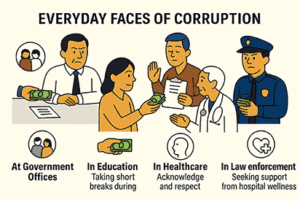
1. At Government Offices
Many citizens dread visiting a government office. Whether it is for getting a driving license, registering property, or even filing a complaint, the expectation of giving a “chai paani” (bribe) has become normal. Officials often delay work or create unnecessary hurdles until they receive payment.
2. In Education
Favoritism and nepotism are also forms of corruption. In schools and universities, students with connections or money may secure admission more easily than those who are more deserving. Such practices discourage merit and push talented youth away.
3. In Healthcare
Hospitals, both public and private, are not immune. Patients are sometimes forced to pay extra to get timely treatment, while doctors may recommend unnecessary tests for personal gain. This endangers lives and exploits vulnerable families.
4. In Law Enforcement
The police, meant to protect, often become part of the problem. From traffic challans to criminal cases, many officers expect bribes before providing justice. This not only erodes trust but also strengthens criminals who can “buy” freedom.
Why Does Corruption Persist?
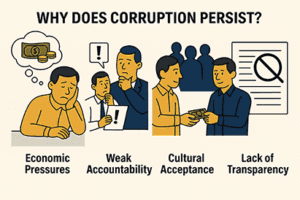
1. Economic Pressures
Low salaries and rising inflation push some employees to seek extra income through unethical means. When survival feels difficult, people justify corruption as a necessity.
2. Weak Accountability
Anti-corruption bodies exist, but enforcement is often selective. Influential individuals escape punishment while ordinary people bear the brunt. This double standard makes laws ineffective.
3. Cultural Acceptance
Corruption has become so common that many view it as “just how things work.” From parents advising children to “settle matters” quickly with a bribe to businesses paying officials under the table, the cycle repeats across generations.
4. Lack of Transparency
Opaque systems and excessive paperwork create room for manipulation. The more complex a process, the easier it becomes for officials to demand illegal payments to “speed things up.”
The Social Cost of Corruption
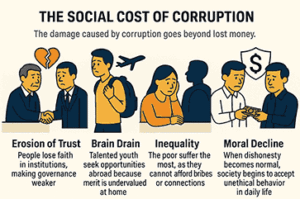
The damage caused by corruption goes beyond lost money.
Erosion of Trust: People lose faith in institutions, making governance weaker.
Brain Drain: Talented youth seek opportunities abroad because merit is undervalued at home.
Inequality: The poor suffer the most, as they cannot afford bribes or connections.
Moral Decline: When dishonesty becomes normal, society begins to accept unethical behavior in daily life.
Steps Toward Change
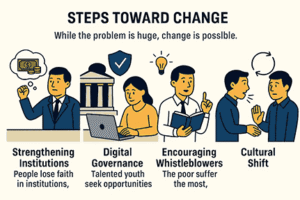
While the problem is huge, change is possible.
1. Strengthening Institutions
Accountability should apply equally to all, from politicians to clerks. Independent bodies must have the power to investigate and punish corruption without political influence.
2. Digital Governance
Technology can reduce human contact in government processes. Online portals for tax filing, property registration, and bill payments can minimize opportunities for bribery.
3. Education and Awareness
Children should be taught from an early age about honesty and fairness. Social campaigns can help citizens recognize that paying bribes, even small ones, sustains the problem.
4. Encouraging Whistleblowers
Citizens who expose corruption must be protected, not punished. Safe reporting systems can empower people to speak out without fear.
5. Cultural Shift
Ultimately, corruption will only end when society refuses to accept it. Families, teachers, and leaders must stress the importance of integrity, even in small matters.












Post Comment